Summary: Contractor access management secures non-employee access by automating onboarding, role-based access, and timely offboarding to eliminate orphaned accounts and compliance risks. Hire2Retire addresses these challenges with time-bound provisioning, automated deprovisioning, RBAC, access certifications, ITSM integration, and complete audit trails, helping organizations strengthen identity security while reducing manual effort and improving compliance.
Organizations increasingly rely on contractors, consultants, vendors, freelancers, and seasonal workers to drive business growth. While these non-employees bring specialized skills and flexibility, they also create unique identity security challenges. They often require immediate access to business-critical systems, yet many organizations still manage their identities through manual processes like spreadsheets and emails. As contracts end, access is frequently overlooked, leaving behind orphaned accounts, unused licenses, and unnecessary security risks. This is where contractor access management becomes critical.
A well-designed contractor access management strategy ensures every contractor receives the right level of access at the right time, and just as importantly, loses that access the moment their engagement ends. Modern identity governance platforms automate this entire lifecycle, helping organizations improve security, reduce IT workload, and maintain compliance. RoboMQ’s Hire2Retire takes this a step further by automating every stage of the contractor identity lifecycle, from onboarding to contract expiration, without relying on manual intervention.
Contingent workforce keeps expanding in various sectors. As stated by Gartner, more businesses use external people to address skills shortages, expedite projects, and promote business expansion. However, at the same time, such flexibility increases the identity attack surface of the organization. Unlike regular employees, contractors have short-term engagements, and their access must automatically terminate once the engagement, Statement of Work (SOW), or project is over. However, in organizations where there are no automated tools, this does not happen often. Without effective contractor access management, organizations face several risks:
These threats not only influence the organization’s security but also decrease operational efficiency and complicate the company’s regulatory compliance according to SOC 2, HIPAA, and ISO 27001 regulations. Proper management of access for contractors enables organizations to remove the listed risks due to the automation of the identity management process and by granting contractors only the permissions required for work.
Temporary identity management is not only about the creation of user accounts. Each contractor has its own engagement period, reporting chain, access requirement, and duration of the contract. Regrettably, many companies face some problems.
These challenges highlight why organizations need a modern contractor access management solution instead of relying on disconnected identity processes.
An efficient contractor access management plan needs more than just creating temporary accounts for contractors. It must automate all phases of the contractor identity lifecycle while maintaining consistent security policies. The following capabilities are essential.
| Capability | Why It Matters |
|---|---|
| Time-bound provisioning | Grants access only for the contract duration |
| Automated deprovisioning | Removes access immediately after contract completion |
| Role-Based Access Control (RBAC) | Provides least-privilege access based on contractor role |
| Access requests and approvals | Enables controlled access extensions when required |
| Access certifications | Ensures temporary access remains appropriate |
| ITSM integration | Creates automated provisioning and offboarding tickets |
| Complete audit trails | Supports regulatory compliance and investigations |
Together, these capabilities strengthen contractor access management while reducing administrative effort for IT and security teams.
The manual management of contractor identities is not scalable anymore, particularly for enterprises that work with hundreds or even thousands of third-party identities. Hire2Retire by RoboMQ automates the contractor identity lifecycle completely, enabling organizations to improve their security stance and increase efficiency. Instead of using spreadsheets, manual tickets, and non-integrated provisioning, Hire2Retire connects your HR application or Vendor Management System (VMS) directly to Active Directory, Microsoft Entra ID, and downstream applications.
In Hire2Retire, contractor accounts are provisioned in an automated manner based on the predefined start and end dates of contracts. The access is granted precisely at the time a contractor becomes active, without any delay, and before it is too late. With this type of automation, organizations will be able to manage contractor access more effectively, as identities can now be synchronized with contractor engagements.
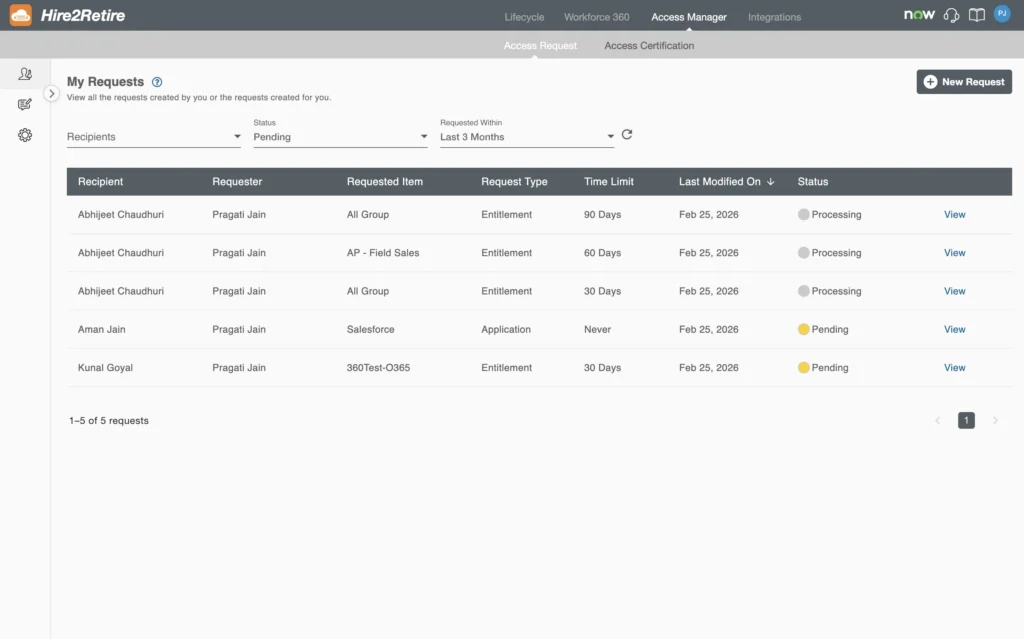
Forgetting contractor accounts can be one of the major security concerns for organizations. In Hire2Retire, user accounts are deprovisioned, application access is revoked, users are removed from all groups, and software licenses are reclaimed immediately once the contract ends. With this process, there would not be orphaned accounts that are very vulnerable to cyber-attacks.
Not all contractors require the same privileges. In Hire2Retire, access is granted based on attributes like department, job title, vendor, project, or location. In this way, contractors are provided with the access that is required for their duties.
Project requirements frequently change during a project. There could be a need to extend the contract with a contractor and provide additional application access. Hire2Retire allows managers to make automated access requests while keeping the workflow of approvals and a complete audit trail. Once the access expiration date is reached, the access will be automatically revoked without further action from anyone.
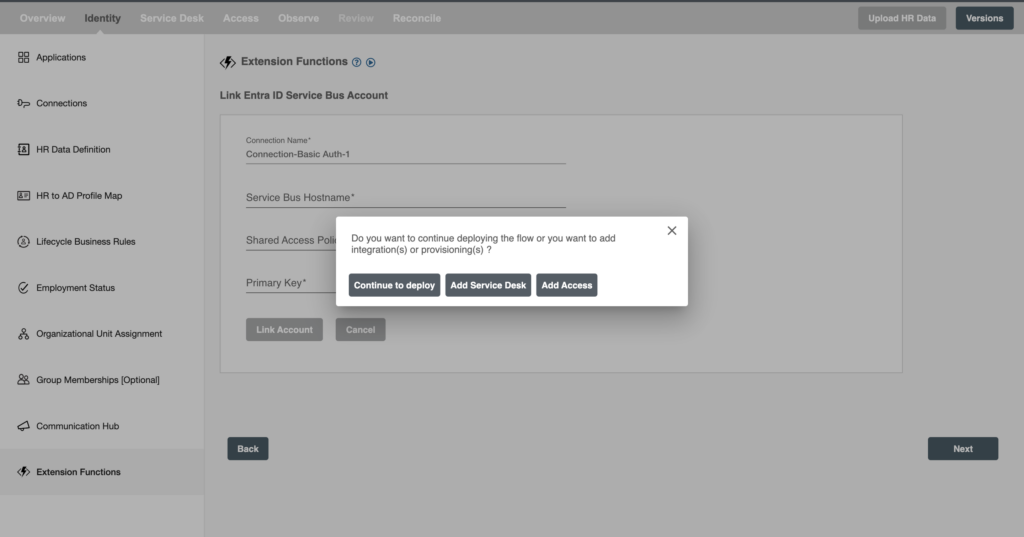
The identity management processes sometimes require more than one team. Hire2Retire can integrate with ITSM systems such as Jira or Freshservice to automatically create provisioning, update, and offboarding tickets. It guarantees full visibility and documentation of all lifecycle events.
By automating contractor access management, organizations will have significant operational and security benefits.
Even with automation, organizations should follow several best practices to strengthen contractor access management.
Following these practices helps organizations maintain a secure and scalable identity governance strategy while reducing compliance risks.
The importance of contractor access management cannot be overstated. In addition to helping secure non-employee identities, managing contractor access helps reduce security risks and ensure compliance. Through the automation of the entire contractor life cycle, Hire2Retire assists organizations in simplifying access management while eliminating any manual processes and orphaned accounts. Ready to simplify contractor access management? Schedule a demo to learn more about how Hire2Retire can automate contractor onboarding, access management, and offboarding all in one solution.
While contractor access management helps secure temporary contractors using time-bound access according to contract dates, employee access management helps secure permanent employees through access that is long-term.
Contractor identity management helps organizations ensure contractors have the appropriate access during their contracts and automatically remove access once their contract ends. This helps manage security risks and prevent orphaned accounts.
Third-party access governance helps control and monitor access by contractors, vendors, and partners.
Hire2Retire facilitates contractor access management through account provisioning, role-based access management, approvals, and automatic removal of access in case of expiry of the contract and SOW.
There are 6 features that must be included in an access management system for vendors, including role-based access control (RBAC), access certification, integration with ITSM, audit trail, and automatic offboarding of identities.