






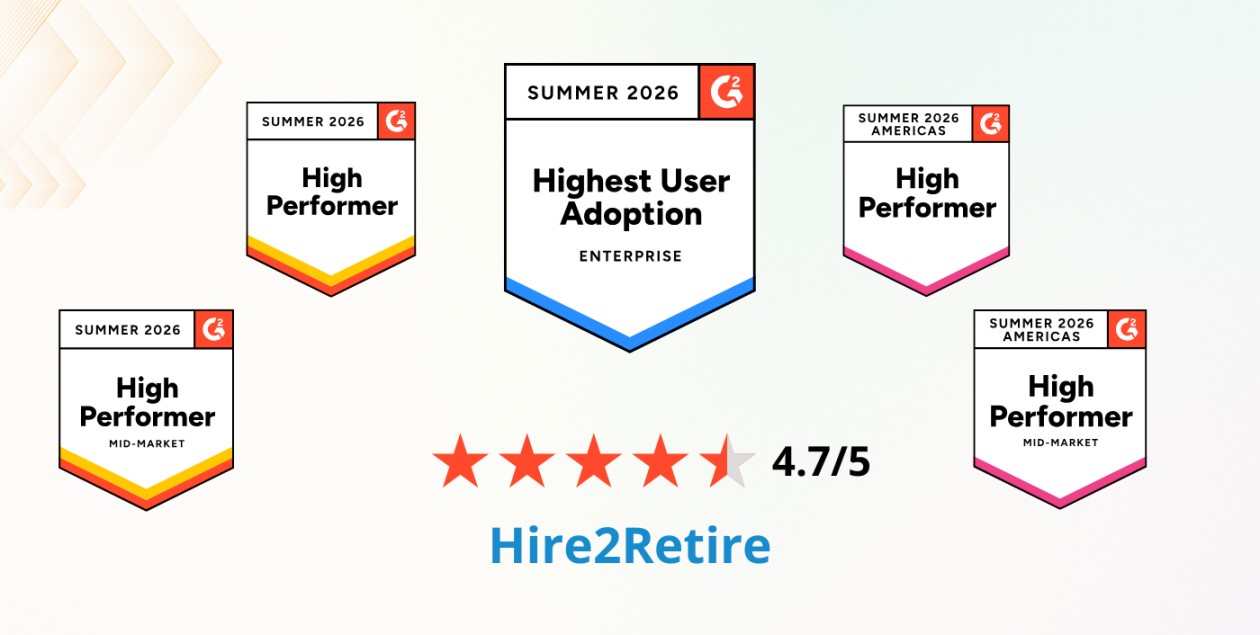
Hire2Retire Earns 7 Badges in G2 Summer 2026 Reports
G2 Summer 2026 Reports are finally here and Hire2Retire has been featured in 28 Reports with 7 new badges. Hire2Retire wins at G2 yet again! We are excited to share

G2 Summer 2026 Reports are finally here and Hire2Retire has been featured in 28 Reports with 7 new badges. Hire2Retire wins at G2 yet again! We are excited to share

Every major breach has something in common, someone had more access than they needed. This blog breaks down the Principle of Least Privilege, why it’s a non-negotiable in today’s IT

The IGA maturity curve shows how organizations gradually strengthen their identity governance capabilities over time. It highlights the shift from basic manual access reviews to more automated, intelligent, and continuous

The key features of modern IGA platforms include identity lifecycle management, AI-powered access reviews, role-based access control, Separation of Duties enforcement, and real-time compliance reporting. Together, these capabilities ensure the

How Hire2Retire helps secure non-human identities using lifecycle automation. Stop orphaned API keys & service accounts from becoming your biggest breach risk.

An IGA tool RFP checklist helps organizations evaluate identity governance platforms against the criteria that matter most. This includes automation depth, compliance coverage, AI capabilities, integration breadth, and total cost

Legacy IGA deployments are costing enterprises 3–6 months per app. Modern, AI-driven platforms have reduced that timeline to hours. Here’s how to choose the right one.

Explore the best IGA solutions for healthcare compliance in 2026 and how Hire2Retire helps healthcare organizations automate provisioning, access governance, and identity lifecycle management.

The best IGA tools for large enterprises in 2026 include Hire2Retire, SailPoint IdentityIQ, Saviynt, Omada Identity, SecurEnds, and Okta Identity Governance. These platforms automate identity lifecycle management, enforce role-based access

The best IGA tools for Joiner Mover Leaver automation & app provisioning in 2026 including Hire2Retire to manage user access and identity lifecycle processes.

Learn how Hire2Retire closes governance gaps and strengthens security for non-human identities (bots, machines, and service accounts) by standardizing controls, improving lifecycle management, and automating key identity and access processes.

Contractor and vendor identities remain a major IAM blind spot. Learn how automated contractor identity management improves security, compliance, and temporary access governance across enterprise systems.

Learn how streamlined non-employee identity management helps secure contractors, vendors, and partners with better visibility, control, and lifecycle governance.

How Hire2Retire identity governance helps in automated provisioning, HR-driven lifecycle management, and SCIM-based access control.

Learn how automated periodic access reviews help organizations reduce audit burden, improve compliance access reviews, and maintain audit-ready identity governance through continuous access certification automation.

Periodic access review ensures users have appropriate access for their roles. AI streamlines this by automating decisions, detecting risks in real time, and reducing manual errors and rubber-stamp approvals.
G2 Summer 2026 Reports are finally here and Hire2Retire has been featured in 28 Reports with 7 new badges. Hire2Retire wins at G2 yet again! We are excited to share
Every major breach has something in common, someone had more access than they needed. This blog breaks down the Principle of Least Privilege, why it’s a non-negotiable in today’s IT
The IGA maturity curve shows how organizations gradually strengthen their identity governance capabilities over time. It highlights the shift from basic manual access reviews to more automated, intelligent, and continuous
The key features of modern IGA platforms include identity lifecycle management, AI-powered access reviews, role-based access control, Separation of Duties enforcement, and real-time compliance reporting. Together, these capabilities ensure the
How Hire2Retire helps secure non-human identities using lifecycle automation. Stop orphaned API keys & service accounts from becoming your biggest breach risk.
An IGA tool RFP checklist helps organizations evaluate identity governance platforms against the criteria that matter most. This includes automation depth, compliance coverage, AI capabilities, integration breadth, and total cost
Legacy IGA deployments are costing enterprises 3–6 months per app. Modern, AI-driven platforms have reduced that timeline to hours. Here’s how to choose the right one.
Explore the best IGA solutions for healthcare compliance in 2026 and how Hire2Retire helps healthcare organizations automate provisioning, access governance, and identity lifecycle management.
The best IGA tools for large enterprises in 2026 include Hire2Retire, SailPoint IdentityIQ, Saviynt, Omada Identity, SecurEnds, and Okta Identity Governance. These platforms automate identity lifecycle management, enforce role-based access
The best IGA tools for Joiner Mover Leaver automation & app provisioning in 2026 including Hire2Retire to manage user access and identity lifecycle processes.
Learn how Hire2Retire closes governance gaps and strengthens security for non-human identities (bots, machines, and service accounts) by standardizing controls, improving lifecycle management, and automating key identity and access processes.
Contractor and vendor identities remain a major IAM blind spot. Learn how automated contractor identity management improves security, compliance, and temporary access governance across enterprise systems.
Learn how streamlined non-employee identity management helps secure contractors, vendors, and partners with better visibility, control, and lifecycle governance.
How Hire2Retire identity governance helps in automated provisioning, HR-driven lifecycle management, and SCIM-based access control.
Learn how automated periodic access reviews help organizations reduce audit burden, improve compliance access reviews, and maintain audit-ready identity governance through continuous access certification automation.
Periodic access review ensures users have appropriate access for their roles. AI streamlines this by automating decisions, detecting risks in real time, and reducing manual errors and rubber-stamp approvals.
Least privilege access is a security approach that gives users only the permissions required for their roles. It reduces cyber risk, prevents privilege creep, simplifies compliance, and limits unauthorized access.