The first day at a new job is supposed to feel exciting. But for many employees, it begins with confusion. The laptop is ready, but the login is not. The email account still needs to be created. Shared folders keep denying access, and IT tickets start piling up even before lunch. Instead of learning and connecting, the new hire ends up waiting for things to work. By the end of the day, excitement turns into quiet frustration.
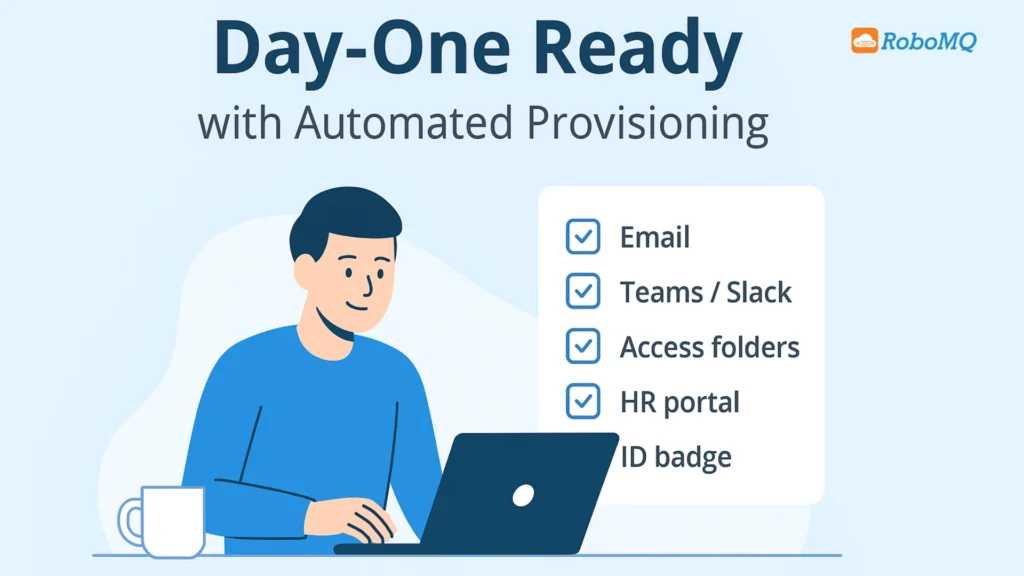
Now imagine a different beginning, one where companies automate employee provisioning to ensure everything works the moment a new hire logs in. The laptop, apps, and access are ready, allowing employees to collaborate, message their manager, and start working from the first hour.
That small difference between waiting and working is what defines a great onboarding experience. And at the center of it all is one choice: whether or not to automate employee provisioning.
For many organizations, employee provisioning is still a manual process built on old habits. HR sends forms and spreadsheets, IT creates accounts by hand, and multiple approvals stretch what should take hours into days.
Each handoff increases the chance of errors. Someone might forget to deactivate an old user account, or assign incorrect access levels, or miss adding a new hire to a critical system. The result is not only lost productivity but also unnecessary security exposure.
A 2024 report revealed that over half of organizations still experience onboarding delays caused by manual provisioning and disconnected systems. Even worse, one in three companies admitted that some inactive user accounts remain open for weeks after an employee exits.
Every missed update or delay adds risk. Manual provisioning is like running an assembly line with missing parts the output never matches the plan. This is where automation starts to reshape how teams think about efficiency and readiness.
When organizations decide to automate employee provisioning, the impact is immediate and long-lasting. Instead of separate systems speaking different languages, data moves freely and accurately between HR and IT.
When HR marks an employee as hired or promoted, the system instantly updates Active Directory or Azure AD, assigns group access, and provisions the right apps. The same happens when someone moves roles or leaves the company.
Automation eliminates repetitive steps, reduces mistakes, and speeds up day-one readiness. According to AIHR, over half of employees say administrative tasks dominate their onboarding experience automation removes that burden, allowing new hires to focus on connecting, learning, and contributing from the very first day. Beyond just time savings, automation helps build trust. It shows employees that their organization is ready for them not the other way around.
This is more than operational efficiency. It’s about giving employees a sense that their company is ready for them not the other way around. Automation makes people feel welcomed, seen, and supported from the very first login.
Every life cycle of an employee consists of three natural parts: joiner, mover, and leaver.
Together, these three stages form the foundation of a secure and consistent employee lifecycle one that keeps access clean, current, and compliant. This seamless flow is the foundation of RoboMQ’s Hire2Retire, a platform that bridges HR systems like Workday, ADP, or BambooHR with identity systems such as Active Directory, Azure AD, or Okta.
The goal is simple one unified process that syncs people data and access in real time. No approvals lost in inboxes, no forgotten updates, and no new hires waiting for IT to catch up.
Before automation, BlueAlly’s IT team spent hours each week manually provisioning accounts and fixing access issues. HR and IT worked in silos, and employees often waited days to get the tools they needed.
When HR entered new-hire information in ADP, the system automatically created user accounts in Azure AD, assigned licenses and permissions based on the employee’s department and role. New employees could contribute as part of their team immediately. Managers no longer needed to raise tickets for simple tasks. IT teams regained valuable time for more strategic projects. The transformation was not just technical it was cultural. BlueAlly built a reputation for being organized, responsive, and people-first. Their workflow became their welcome message.
Horizon Services had a similar story. As they grew their workforce, managing identities by hand ultimately became incompatible with the needs of the organization. As the onboarding approach lagged in consistency and offboarding had challenges, access permissions declined even farther from real world changes. When the HR updates were incorporated into Hire2Retire, it began to facilitate real-time provisioning, depending on the update. The system automatically synced employee data, created user accounts, and ensured access was accurate from day one.
Within weeks, Horizon Services saw onboarding times cut in half. Employee satisfaction improved because new hires could begin work immediately. IT noticed fewer access requests and spent less time troubleshooting user issues. The biggest win was intangible a smoother, more confident first impression for every employee joining the team.
These examples show that automation does more than fix a process it reshapes culture and confidence from day one.
Automation is typically considered a technical endeavor however, fundamentally it’s a human one. Each process that gets automated releases someone, somewhere from repetitive, drudging work. It allows people in HR and IT to spend time focusing on employee engagement, company culture, and making people feel appreciated.
When an organization chooses to automate employee provisioning, it also chooses to make a statement about its priorities. It is communicating that people’s time matters, that the first impression matters, and that smooth, seamless access is part of displaying respect. Onboarding becomes more than a just an onboarding checklist it is a mirror of how much the organization values preparedness and empathy.
Hybrid and remote work have made employee provisioning more complex than ever. People work from different locations, devices, and time zones, which means their access must be securely available to them wherever they may take their work.
Automation allows every employee whether they are in-office or working remotely to have what they need without undue hesitation or manual oversight. It also keeps the data accurate, ensuring compliance and minimizing risk across the organization.
With Hire2Retire, each update made in the HR system becomes a real-time action in IT. It means that only the right people have access to the right systems with the right timing.
The future of work is no longer about where employees are sitting, rather, it’s how they feel connected. Those organizations that simply reduce technology distractions and eliminate friction will succeed as Employer of Choice.
When the provisioning process is automatically completed, employees can concentrate on learning, performing, and thriving from their very first day. HR and IT can focus on strategy instead of setup. And leadership can focus on growth instead of gaps.
RoboMQ’s Hire2Retire makes that future possible. It brings together the systems, data, and people that power your business into one unified experience.
Because, in today’s world, onboarding isn’t only a question of whether systems work it is about whether people feel like they belong the very first time they log in. Automate employee provisioning and turn every first day into the best day.
Automate employee provisioning means that technology is being used to automatically create, manage and delete user accounts in systems. Employee provisioning means that every new hire has the correct access the second they arrive on their first day, with no manual for setup, or downtime.
Automated provisioning will eliminate manual and repetitive tasks, reduce error, and save valuable time. HR can concentrate on individuals; IT can concentrate on innovation and employees can immediately do productive work from the minute they log into their account.
Automated provisioning allows instant access to tools, applications and data. Employees feel somewhat empowered and connected, allowing organizations to deliver a better, more engaging onboarding and transitions experience.
RoboMQ’s Hire2Retire is an integration of HR systems with identity and IT platforms to automatically create, update and deactivate accounts. Keep Data in sync in real time and remain compliant throughout the employee lifecycle.
With Hire2Retire, pricing is flexible based on your organization, systems and use cases. Either request a custom quote or book a demo in order to learn more about pricing options. Learn more on our pricing page.