Think of a new hire who's waiting for days to get the right access and IT struggles to update permissions. Or someone who’s already moved to a new team but can still see files from their old one. That’s what happens when access is managed manually and honestly, it doesn’t have to be like that.
Every company today runs on a mix of cloud apps, internal tools, and team platforms. These systems make life easier until you have to manage who gets access to what.
And that is where things usually start to break.
Giving new employees access, changing permissions when people move teams, or removing access when someone leaves is a lot to handle. Doing it all by hand might seem fine at first, but once your business scales, it becomes a nightmare.
Let’s be honest. Manual identity management was never perfect. Someone from IT creates accounts, updates permissions, or disables access. It is slow, repetitive, and easy to mess up.
Here’s what usually goes wrong:
Too slow - Onboarding or role changes take forever, leaving employees waiting around.
Human mistakes - A wrong permission here, an overlooked account there, and you have got a security gap.
Compliance chaos - Keeping track of who got what and when is almost impossible without proper documentation.
The Identity Defined Security Alliance found that 90 percent of companies had at least one identity-related issue last year, and 84 percent said it actually impacted their business. That says enough, doesn’t it?
How Automation Fixes All That
Automation takes over the routine stuff and does it faster, cleaner, and more reliably than humans ever could. Once you set the rules, everything else just flows.
Here’s what it can do:
Automatic onboarding and offboarding: No more manual setup. New hires get instant access; leavers lose it right away.
Role-based access (RBAC): People get permissions based on what they do. Change a role, and their access updates automatically.
Real-time updates: All systems stay in sync, whether it is Active Directory, Okta, Entra ID, or Google Workspace.
Built-in audit logs: Every change is tracked. When auditors come knocking, you have everything documented.
In short, automation makes things faster, safer, and a lot less painful.
The Payoff: What You Actually Get from Automating Identity Governance
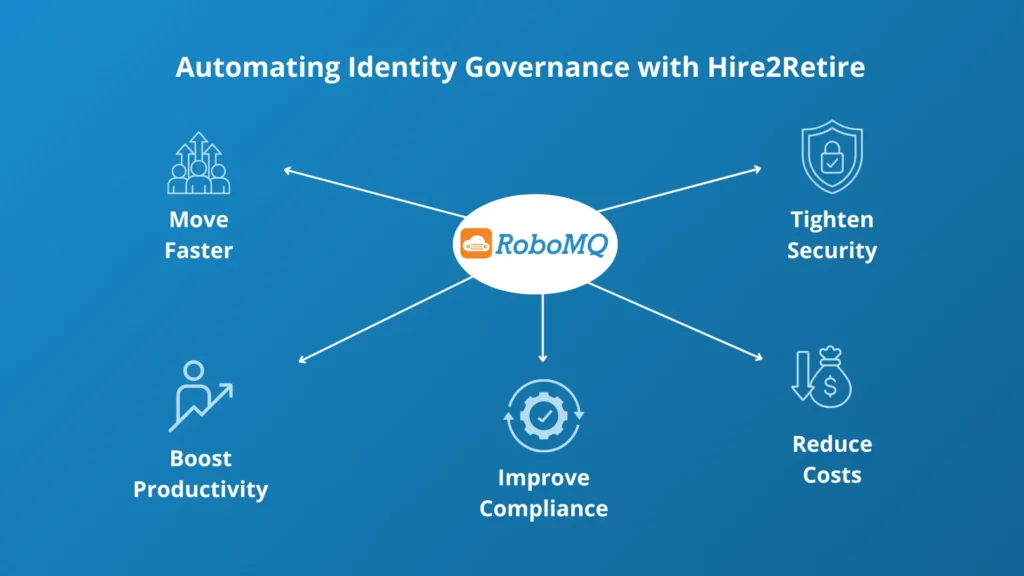
You move faster
New hires get instant access to the tools they need no more waiting for days or weeks. When someone changes roles or gets promoted, their permissions update automatically. That means teams can keep working smoothly without delays. This speed keeps projects moving, prevents slowdowns, and helps everyone get started right away.
You tighten security
Automation takes out the guesswork. People only get access to what they really need for their job. Nothing extra hanging around. That means fewer chances of mistakes, leaks, or anyone seeing data they shouldn’t. It’s a simple way to keep things safer without adding more work.
You breeze through audits
Audits don’t have to be a headache anymore. Every change gets tracked on its own, so you already have all the proof you need. When someone asks for a report or compliance check, it’s right there no digging through old emails or spreadsheets.
You make employees happier
Nobody likes waiting on IT just to start working. When accesses are given automatically, it eliminates the frustration of employees which makes them feel less stuck making everyday workflow easy. Employees feel empowered because access works when they need it, and IT teams can focus on meaningful projects instead of repetitive account fixes.
You save money
Less manual work means fewer mistakes and less time wasted fixing them. That alone saves a lot. Add fewer security problems or compliance fines, and it really adds up. Over time, you end up saving more than you expect money, time, and effort.
How to Get Automation Right
If you are thinking of automating, do not just rush in. There is a bit of planning involved.
Map the employee journey. Know what happens when someone joins, changes roles, or leaves.
Connect HR, IT, and security systems. Updates in HR should trigger changes everywhere else.
Set clear roles. Define what access each role really needs. That is the backbone of automation.
Keep checking in. Automation is not a one-and-done deal. Review and fine-tune regularly.
A Real Example: How EXO Did It
Take EXO, for example, a fast-growing company that was struggling to keep up with all the manual access changes. IT was swamped, and the process was not secure.
Zero-touch provisioning - Employees were onboarded automatically.
Tighter control - Access was always right, based on role.
Smoother operations - HR and IT finally got time back to focus on real work.
The whole system became faster, cleaner, and far more secure. No more delays or dangling accounts.
The Bottom Line
Manually managing access used to work. It does not anymore. The risks are higher, systems are more complex, and people move roles faster than ever.
Automation makes life easier. It gives your IT team time to focus on bigger goals instead of password resets. It keeps your company compliant. And it closes the security gaps that humans often miss.
At the end of the day, it is not just about saving time. It is about keeping your organization safe, productive, and ready to grow.
Next Step
If you are ready to make access management one less thing to worry about, check out RoboMQ’s identity automation solution – Hire2Retire. From onboarding to offboarding, everything connects, HR, IT, and security, all in sync.
Because the best systems are the ones that just work quietly in the background.
Manual governance is slow, error-prone, and hard to scale. As organizations adopt more cloud tools and hybrid work models, managing access manually increases the risk of delays, security breaches, and compliance issues.
Automation speeds up onboarding and offboarding, ensures accurate access for every role, and provides real-time audit logs. It saves time, reduces errors, and helps IT teams stay focused on strategic work instead of repetitive fixes.
Automated systems record every access change and create built-in audit trails. This means compliance reports are always up to date and easily available, eliminating the stress of manual documentation.
RoboMQ’s Hire2Retire solution automates the entire employee identity lifecycle, from onboarding to offboarding, by syncing HR and IT systems in real time. This eliminates manual errors, ensures timely access updates, and strengthens compliance. You can learn more about how it works and why businesses choose it at Why Hire2Retire page.
You can explore how Hire2Retire automates identity governance by watching the live demo videos. The videos walk you through real-world workflows and show how automation helps HR, IT, and security teams stay perfectly in sync.
Swati Gole
Swati Gole is a Marketing Specialist at RoboMQ. She blends creativity with strategy to craft meaningful brand experiences. With a background in digital marketing and communications, she creates stories and campaigns that connect with people and drive growth across web, social, and new-age digital platforms.
Swati Gole
Swati Gole is a Marketing Specialist at RoboMQ. She blends creativity with strategy to craft meaningful brand experiences. With a background in digital marketing and communications, she creates stories and campaigns that connect with people and drive growth across web, social, and new-age digital platforms.
Our website uses cookies. By continuing to browse the website you are agreeing to our use of cookies. For more information on how we use cookies and how you can disable them, please read our Privacy Policy. I Accept.