Summary: Shadow IT is the use of unapproved apps, devices, or cloud services without IT's knowledge. It creates data loss, compliance, and identity risks. Hire2Retire addresses it by automating access governance tied directly to your HR system, so every identity is provisioned, updated, and deprovisioned based on real role data.
Your IT team approved a set of tools. Your employees are using a different set. That’s shadow IT. And it’s happening in every department of your organization right now, not because people are careless, but because the tools IT approves are often too slow, too rigid, or not available on day one. The real damage isn’t just the unsanctioned apps. It’s the untracked identities, the unrevoked access, and the compliance gaps those tools leave behind long after the work is done. This blog discusses what exactly shadow IT is and how Hire2Retire handles it.
Shadow IT is the use of any hardware, software, or cloud-based solution by an employee without IT’s knowledge or authorization. It doesn’t always look obvious. It can be a developer who sets up a cloud server using a personal account. Or it could be a salesperson using his/her own Google Drive for storing a customer proposal. And in many cases today, it’s about an employee uploading the company’s sensitive information into a third-party application. Shadow IT is a growing concern. Gartner estimates it accounts for 30% to 40% of IT spending, while Everest Group reports it can exceed 50%.
Shadow IT creates serious access governance challenges for organizations.
When employees use unauthorized applications or services, the organization loses control over who can access what. The IT staff may be unaware of what resources are being utilized, who has access to them, and what privileges are assigned to these individuals. It makes it challenging for companies to implement security measures and detect any security threats.
Shadow IT often operates outside formal identity and access management processes. As a result, any changes in the role of an employee, transfer to a new department, or the termination of employment do not affect the status of his/her account. Inactive access rights remain active, which leads to a surplus of permissions and unnecessary access to sensitive resources.
In many regulatory environments, companies must prove that access controls within the company are effective and are subject to regular auditing. When an application runs independently, without being controlled by any central authority, a company may not have proper audit trails that can prove which employees accessed resources, when they accessed these resources, and whether the access was appropriate or not.
Hire2Retire by RoboMQ approaches shadow IT as an identity governance problem, not a tool discovery problem. Its foundation is straightforward: your HR system holds the authoritative record of every employee’s current role, status, and organizational position. Every access decision flows from that record, automatically, continuously, and without manual intervention.
A large portion of shadow IT adoption happens because approved access isn’t ready when employees need it. Hire2Retire directly connects your HR systems, including Workday, ADP, SAP SuccessFactors, UKG, BambooHR, and more than 20 others, to your IT and identity platforms. It allows for the new hires to get all the necessary access from day 1. When the approved path is fast and complete, the motivation to seek workarounds drops significantly.
Hire2Retire combines role-based access control with attribute-based access control to implement access decisions based on current HR attributes, including job title, location, department, employment status, etc. When an employee gets a transfer or changes roles, all the old permissions are removed, and new ones are added. This ensures that employees have access only to relevant systems or apps.
The moment an employee’s status changes, i.e., role transition, resignation, or termination, Hire2Retire acts immediately. Accounts are disabled. Directory group memberships are removed. Software licenses are revoked. Active sessions are terminated. This applies across Active Directory, Microsoft Entra ID, Google Workspace, and connected SaaS applications.
If access was granted through SSO, it is cut off at the identity layer the moment the HR record reflects the change. The shadow identities, meaning those unmanaged, lingering accounts that quietly accumulate when employee offboarding is handled manually, stop being a problem when deprovisioning is automated and HR-driven.
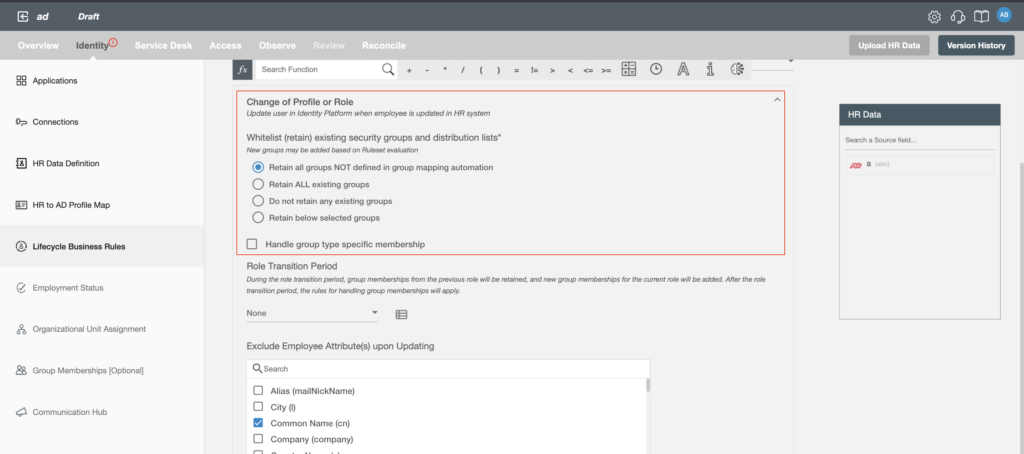
Contractors and seasonal workers are one of the most consistent sources of orphaned credentials. Hire2Retire addresses this directly by supporting time-bound access provisioning tied to contract end dates. When the defined period closes, access is automatically revoked across all connected systems, no ticket required, no manual follow-up, no accounts quietly persisting past their expiry.
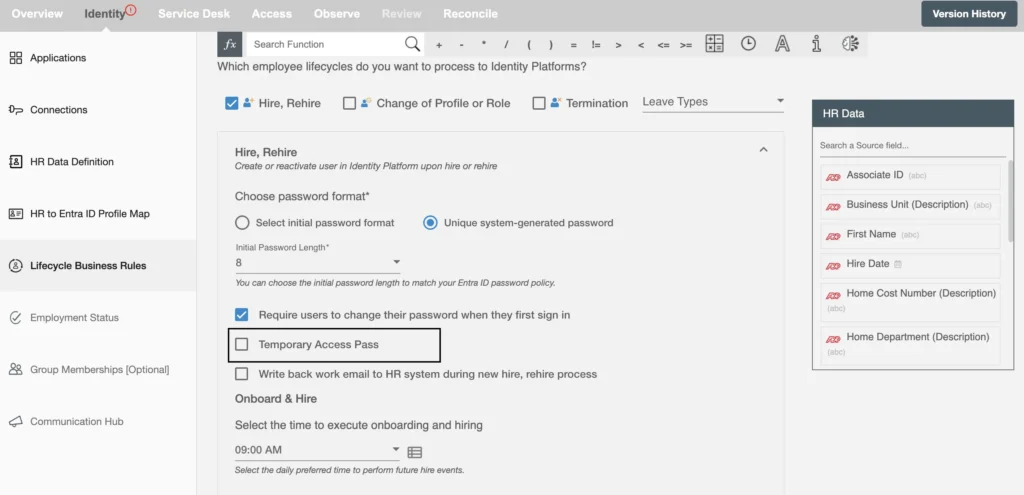
When an employee transfers internally, their permissions are dynamically adjusted to reflect the new role. Access tied to their previous department is stripped away. Access required for the new position is provisioned in its place. This closes the mover gap, the period between a role change being recorded in HR and IT updates the access, which is where privilege accumulation and shadow identity risks most commonly develop.
Every identity event Hire2Retire processes is logged, including provisioning actions, access changes, permission removals, and session terminations. This creates a continuous, time-stamped record of who had access to what, and when it changed. Security teams gain the visibility to detect anomalies before they become incidents. Compliance teams get audit-ready evidence for SOC 2, ISO 27001, and HIPAA without having to reconstruct access history under pressure.
While shadow IT introduces a variety of security and governance challenges, many of these risks stem from unmanaged identities and access. The table below highlights some common shadow IT risks and how Hire2Retire helps organizations address them through automated identity lifecycle management.
| Shadow IT Challenge | How Hire2Retire Helps |
|---|---|
| Delayed access for new hires | Automates Day One provisioning from HR data |
| Excessive permissions after role changes | Automatically updates access based on current role |
| Orphaned accounts after departures | Instantly deprovisions users across connected systems |
| Forgotten contractor access | Revokes access automatically when contracts end |
| Limited visibility into access | Maintains centralized audit trails for every access change |
| Compliance and audit challenges | Provides audit-ready records and reporting |
Shadow IT isn’t going anywhere anytime soon. With employees needing tools at a quicker pace than procurement can provide, there will always be a workaround. The objective is not to eliminate shadow IT but rather to make sure that any identities and permissions created by it do not survive beyond their usefulness.
This is precisely what Hire2Retire does. It ensures that your access is continuously synced with your HR and directory, which means that every access will be relevant and tied to a current and valid identity. To learn more about how Hire2Retire can help you address the threat of ungoverned access, book a demo with our experts.
No, but there is always that possibility. Utilizing the unsanctioned tool for processing personal data may amount to a violation of the GDPR or HIPAA, regardless of the motive behind such utilization. It’s about the presence of proper security measures in use, not intentions!
Discovering unauthorized access requires tools such as CASB, analysis of DNS traffic, and network traffic control. After discovering the shadow IT, the next phase involves controlling the identities used by such tools, which brings into play solutions such as Hire2Retire.
Absolutely! The act of using a publicly accessible generative AI tool for processing data belonging to the organization falls under the category of Shadow IT. This is among the most challenging and widespread types of Shadow IT, since there is nothing abnormal about browsing behavior.
Yes, Hire2Retire enables setting up access to expire on a predefined date. When the period ends, the access automatically expires in all connected systems.