It’s 2025, and organizations are moving toward automation and innovation, including the introduction of passkeys, biometrics replacing passwords, and much more. Trends in the tech industry indicate that managing identity and access is becoming increasingly crucial for organizations as AI adoption grows.
If you’re looking for a solution to align IAM solutions with current workflows and manage the workforce lifecycle effectively, this blog is for you. Identity and Access Management (IAM) plays a vital role in cybersecurity, especially as hackers continue to evolve daily.
In 2024, compliance statistics showed that 61% of organizations implemented hotline or internal reporting policies to swiftly identify compliance issues and cybersecurity threats. Notably, most data breaches stem from within organizations, often initiated by employees with access privileges.
Therefore, monitoring who has access to which systems is essential. But how can this be achieved? While IAM solutions exist for mid-to-large companies, many organizations still struggle to streamline their workforce.
What is Workforce Lifecycle Management?
Employee lifecycle management refers to which is the process of managing an employee’s journey from onboarding to departure. When we discuss the workforce, it includes hybrid, remote, and on-site workers, as well as permanent and temporary employees, covering the entire workforce.
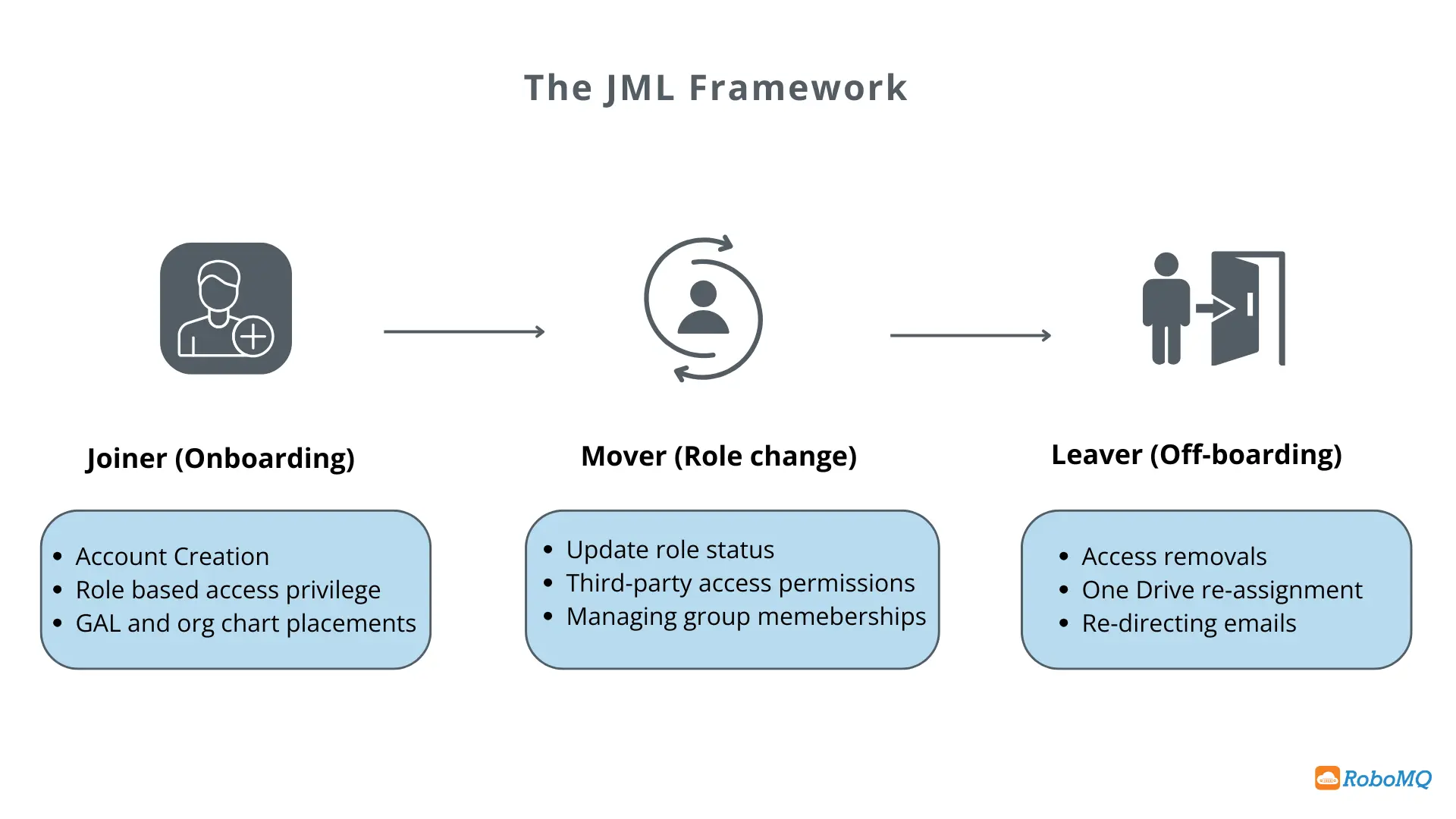
This also involves the Joiner, Mover, Leaver (JML) framework, which manages employee identities and access within an organization. Let’s review what needs to be managed within this JML framework.
Joiner (Onboarding)
Mover (Role Change)
The Mover stage addresses employees who change roles internally:
Mover events often need a transition period of a few weeks after role changes.
Leaver (Off-boarding)
Managing the JML process is crucial for any organization, as timely provisioning and de-provisioning of employee accounts is essential.
Why Does Workforce Lifecycle Management Matter for IAM?
Workforce lifecycle management is essential to IAM. Automating this process can eliminate manual work, boosting productivity. As mentioned earlier, timely identity updates not only help reduce security risks but also prevent insider threats and cyber-attacks. It also helps meet security and compliance requirements, making the entire audit process smoother.
The Main Challenges of JML Execution
Disconnected identity management systems without real-time integration between your HR system and IdPs lead to delays, wasted time, and resources.
Manually changing policies for role updates can interfere with zero-trust policies. Additionally, not removing access from accounts increases the risk of security breaches.
Overall, disconnected manual processes add more workload for your HR and IT teams.
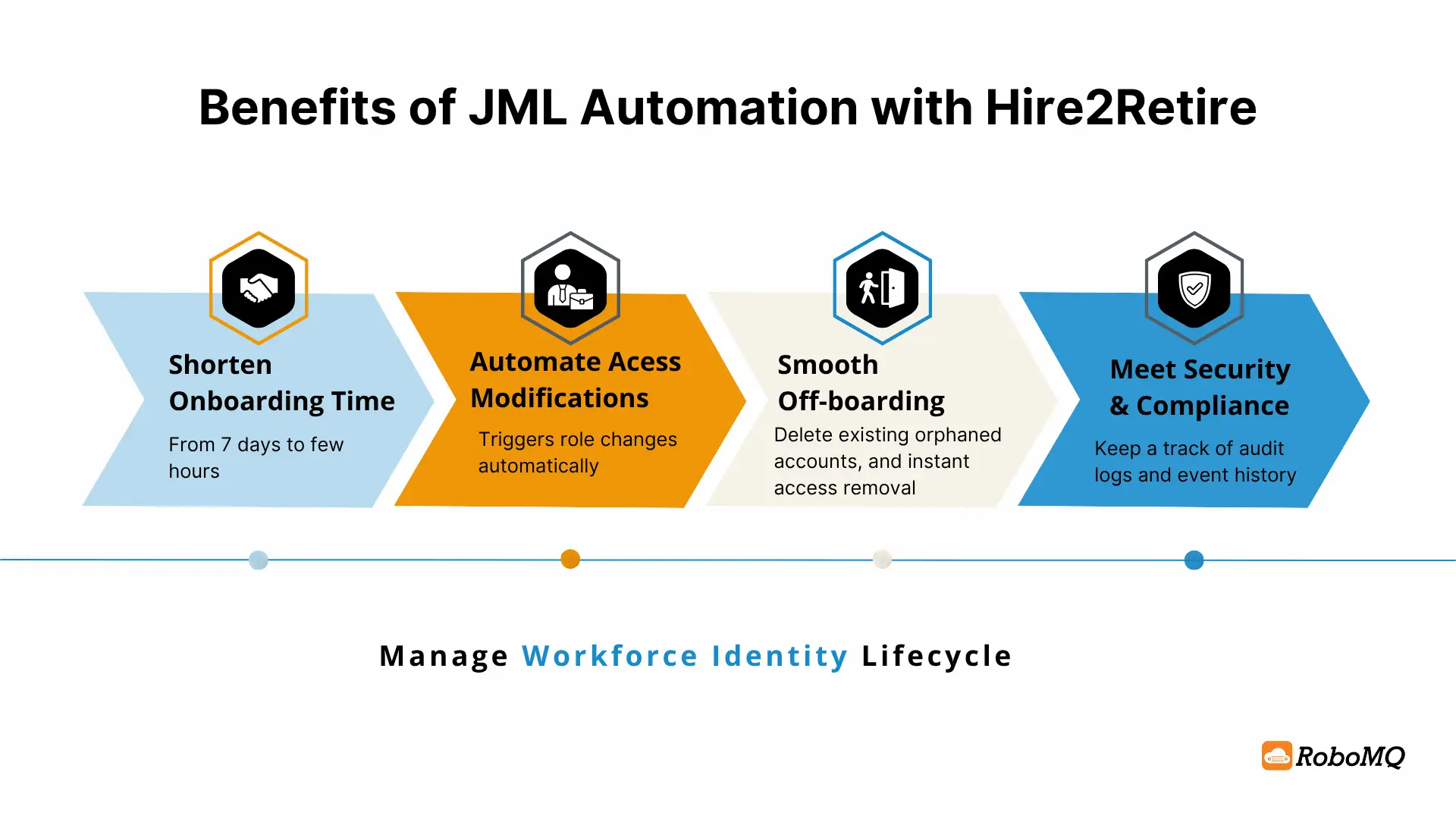
Core Benefits of Automating the JML Process
Choosing the right JML automation solution can help you avoid these challenges. It can also reduce costs associated with manual processes, giving your sysadmins more time to focus on strategic issues.
Tune in to this webinar to gain more insights into automating JML to Identity.
Final Takeaways
Identity Lifecycle Management is the foundation of IAM because it offers a comprehensive approach to managing digital identities throughout their existence within an organization, reducing security risks, manual workload, and enhancing operational efficiencies.
Choosing Hire2Retire for this automation journey will expedite results, boost productivity, and offer a comprehensive solution for users, resources, access, and full Microsoft access provisioning. Furthermore, you can leverage expert supervision from our team at Hire2Retire.
So, what are you waiting for? Book a free demo call with us today!!